
ONLY VIOLENCE STAYED FOR THE TRUTH

The city loved symbols the way it loved neon: bright enough to sell the night, cheap enough to replace when they burn out. Every year it dressed itself up in fresh colours and practiced saying the right words in public, like a man rehearsing an apology in a mirror he didn’t plan to mean. It called that progress. It called that pride. It called that community. In the daylight, the same streets still stepped over people without slowing down, and the same institutions still ran on shortages, delays, and polite refusals. But the banners looked good in photos, and photos were the closest thing the city had to a conscience.
When her crisis came, it didn’t arrive as poetry. It came as bone-deep fatigue and a calendar full of appointments that never happened on time. It came as a phone tree, a voicemail box, a referral to another referral. It came as doors that opened only after you proved you deserved to walk through them. The waiting rooms were full of laminated optimism—posters about being seen, slogans about safety, smiling faces floating above the fine print. The words were soft. The chairs were hard. The line moved like a bad alibi.
On the walls, flags hung like promises. Some of them were there out of genuine care, some of them because someone had decided it was good policy, and some of them because nobody wanted to be the first to take them down. She watched people glide past those colours with the confidence of the healthy, the kind of confidence that thinks it’s virtue. She watched the same people who could chant about liberation on a weekend go silent on a weekday when the subject turned to shortages, billing codes, and the ugly mechanics of staying alive. Nobody wanted to talk about that part. It wasn’t cute. It wasn’t shareable. It didn’t fit on a tote bag.
There were activists, too—real ones, loud ones, tired ones, earnest ones, the whole spectrum. Some showed up like firefighters, carrying water into burning rooms. Others showed up like marketers, carrying a ring light and a list of approved phrases. The difference wasn’t always visible at first. Both kinds wore the right colours. Both kinds spoke the language. Both kinds knew how to make a crowd rally. But only one kind stayed after the applause died and the work got quiet and expensive.
The city had an appetite for stories, but it was a picky eater. It liked wounds it could romanticise, pain it could turn into a moral lesson, survival it could use as proof that everything was better now. It didn’t like the unmarketable truth: that living takes infrastructure, that bodies need medicine, that rights live on paper before they live in the street. It didn’t like the truth that some people don’t get to treat society like a bonfire metaphor because they’re still depending on those systems to breathe, to eat, to be recognised as who they are when a clerk is deciding what box they fit in.
She knew that dependence the way you know a bad neighbourhood—by the exits, by the hours to avoid, by the sound it makes when things are about to go wrong. Her life was a chain of permissions: prescriptions refilled on time or not, legal documents updated or not, appointments approved or not. A missed signature could turn into a month of suffering. A careless policy change could turn into a cliff. For some people, “burn it down” was a slogan. For her, it sounded like someone threatening the bridge she still had to cross.
In public, everyone loved to say they were on the side of the vulnerable. In private, they treated vulnerability like a stain that might rub off. They could handle the idea of a person in pain; they couldn’t handle the logistics. They could handle an inspiring speech; they couldn’t handle the paperwork that followed it. They could handle a march; they couldn’t handle a ride to the pharmacy at night when the snow was falling and the bus had stopped running. They wanted the feeling of helping, not the responsibility of it.
So she learned how the social contract really worked: the city did charity the way it did fashion—seasonal, performative, abandoned the moment it stopped flattering the wearer. When pain stayed stylish, it had an audience. When pain got specific—when it asked for resources, time, sacrifice—people got busy. They didn’t have to push her away. They just drifted, like smoke finding the nearest crack to escape through.
Some of them called it boundaries. Some called it burnout. Some called it self-care, like a prayer they said to themselves to avoid guilt. She didn’t argue. She didn’t chase. She’d spent too much time chasing things that were supposed to be guaranteed: access, recognition, basic competence from systems that said they were there to help. She didn’t have extra energy to spend convincing strangers to act like they meant what they posted.
And then there were the men—always men—who came sniffing around the edges of it like it was a perfume. They didn’t ask what she needed. They asked what she was. They called her “intense” and meant it like a compliment, the way you might compliment a knife for being sharp. They asked if her energy was good or dangerous, like a woman’s spine was a parlour trick. They wanted the danger in the abstract: the aura, the edge, the story cleaned up into something they could flirt with. They didn’t want the actual truth that made her the way she was—the nights that taught her how to listen for disaster, the mornings that began with pill bottles and contingency plans, the legal hurdles that made ordinary life feel like a court case with no closing arguments.
They liked her most when she was a rumour. They liked her least when she was a ledger.
The city encouraged that kind of misunderstanding. It trained people to read depth as attitude, resilience as arrogance, boundaries as a challenge. It taught them to approach pain like a spectacle: look, react, move on. It taught them to treat a survivor like a character in their own private film. When she spoke plainly, they called it harsh. When she refused to flatter them, they called it bitterness. When she described the structures that hurt her, they tried to turn it into a personal disagreement, like the problem was her tone and not the machinery chewing people up.
She watched organisations pose beside the same flags while their waiting lists grew longer. She watched public statements bloom like flowers while clinics closed like shutters. She watched speeches about inclusion land in rooms where the air still tasted like neglect. It wasn’t that symbols were worthless. It was that symbols were cheaper than solutions, and the city had always preferred bargains over bills.
There were people inside the community who showed their humanity the way it’s meant to be shown: quietly, consistently, without needing credit. A nurse who didn’t roll her eyes at complicated history. A receptionist who didn’t smirk at a legal name mismatch. A friend who didn’t ask for a perfectly packaged explanation before offering help. Those moments mattered. They were proof that tenderness could survive in a place built to grind it down. But tenderness was small and violence was big, and big things cast longer shadows.
The violence wasn’t always a fist. Sometimes it was a denial letter written in polite font. Sometimes it was the gap between a promise and its funding. Sometimes it was the way the system treated her body like an inconvenience, a cost centre, a risk. Sometimes it was the way strangers demanded she be inspiring on command, demanded she translate her pain into something consumable, demanded she deny her own reality to preserve their comfort. Violence, in this town, wore many suits.
It seeped into her calendar. It sat in her mailbox. It lived in the minutes between “we’ll call you back” and the silence that followed. It was the constant sense that her life was subject to other people’s moods: the pharmacist’s patience, the doctor’s schedule, the clerk’s bias, the politician’s appetite for headlines. It was the knowledge that the law could be both her shield and her chain, and that she needed it anyway. There was no purity test that kept you alive. There was only what worked.
Winter made the city honest. Not kinder—just honest. The cold stripped away the parties, the festivals, the sunny speeches. It left the essentials: heat, food, medicine, shelter, paperwork that didn’t care about your feelings. Holiday lights appeared in windows like a joke told by someone who didn’t know the punchline. People spoke about togetherness as if it were a natural resource, as if loneliness was some personal failure instead of a system doing its job.
She didn’t make enemies. She didn’t stage dramatic exits. She didn’t slam doors. She simply stopped performing her pain in ways that made others feel heroic. She stopped rounding the edges of her truth to make it easier to swallow. She stopped pretending she could afford to lose the structures she depended on just to prove she was brave.
And what remained was stark: one person, one body, one set of needs, moving through a society that loved liberation in theory and resented it in practice. A society that celebrated identity as culture but balked at identity as a legal fact. A society that clapped for defiance but flinched from dependency. A society that told her she was free—so long as her freedom didn’t require anything from anyone.
That’s the trick the city plays. It sells you belonging in bright colours while charging you extra for survival. It praises your authenticity until it becomes inconvenient. It teaches you to call neglect “growth,” abandonment “boundaries,” and bureaucratic cruelty “policy.” It gives you language for everything except responsibility, and then it wonders why people get sharp.
By the time December came around again, she understood something clean and terrible: the crowd isn’t a home. It’s a weather pattern. It changes with the season, with the headlines, with whatever makes people feel good about themselves that week. If you build your life under it, you’ll spend every year wet and wondering what you did wrong. So she built smaller. She built quieter. She built sturdier. She learned to keep her necessities close and her expectations closer. She learned that solitude wasn’t a punishment; it was an insurance policy she could actually rely on.
In the end, only violence stayed for the truth, because violence is loyal in the ugliest way. It doesn’t get bored. It doesn’t drift. It doesn’t decide it’s moving on to a nicer story. It persists in the gaps, in the refusals, in the cheap promises hung on expensive walls. It is the one thing you can count on in a system that calls itself compassionate while letting people fall through its hands.
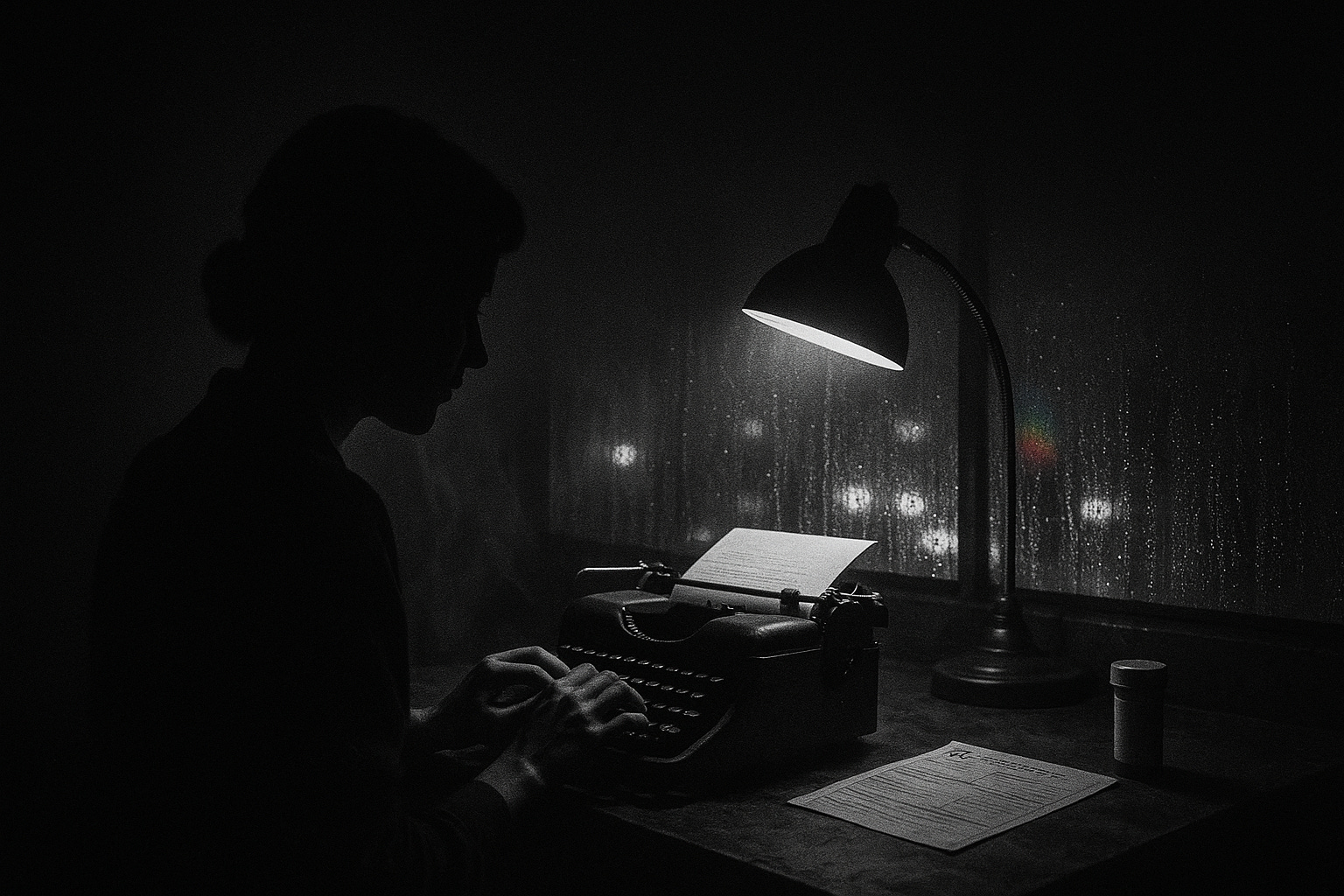
And she—without speeches, without slogans, without a crowd—kept herself alive anyway, one form, one refill, one hard-earned inch of recognition at a time, listening to the keys of an old typewriter strike the page like rain on a window that never opens.